May 2026
Всемирный день щитовидной железы: забота о вашей «железе-бабочке»

25 мая отмечается Всемирный день щитовидной железы — ежегодная международная инициатива в области здравоохранения, учрежденная Международной федерацией щитовидной железы (TFI) в 2008 году для повышения осведомленности общественности о здоровье щитовидной железы и связанных с ней заболеваниях. Щитовидная железа известна как «центр управления метаболизмом в организме». эта железа в форме бабочки в Передняя часть шеи вырабатывает гормоны, регулирующие энергетический обмен, частоту сердечных сокращений, температуру тела, рост волос и ногтей, настроение и фертильность. Заболевания щитовидной железы входят в число наиболее распространенных эндокринных заболеваний в мире. Затрагивает миллионы людей, но многие остаются незамеченными из-за скрытых проявлений. симптомы.
Раннее выявление и точная диагностика имеют решающее значение для поддержания здоровья щитовидной железы. Для начала давайте разберемся, кому необходимы анализы на функцию щитовидной железы, какие распространенные заболевания щитовидной железы могут быть причиной их возникновения.
Кому необходимы анализы на функцию щитовидной железы?
Регулярное обследование функции щитовидной железы рекомендуется следующим группам высокого риска и лицам с соответствующими симптомами:
①Люди с семейным анамнезом заболеваний щитовидной железы;
②Беременные или женщины в послеродовой период;
③Люди с необъяснимой усталостью, изменениями веса, непереносимостью холода, непереносимостью жары, выпадением волос или перепадами настроения;
④Лица с зобом или узлами щитовидной железы;
⑤Люди принимают лекарства, которые могут влиять на функцию щитовидной железы (например, литий, амиодарон).
Распространенные заболевания щитовидной железы и их вредное воздействие
К наиболее распространенным заболеваниям щитовидной железы относятся гипотиреоз, гипертиреоз, тиреоидит Хашимото и узлы щитовидной железы.
Нелеченный гипотиреоз может привести к усталости, увеличению веса, депрессии и даже сердечно-сосудистым проблемам; гипертиреоз может вызвать учащенное сердцебиение, бессонницу, потерю веса и заболевания глаз. Тиреоидит Хашимото, распространенное аутоиммунное заболевание, может постепенно ухудшается функция щитовидной железы и могут привести к гипотиреозу. Узлы щитовидной железы, хотя в большинстве случаев и доброкачественные, требуют регулярного наблюдения для исключения злокачественных новообразований, поскольку нелеченный рак щитовидной железы может распространиться и повлиять на общее состояние здоровья.

Комплексные биомаркеры щитовидной железы
1. Тиреотропный гормон (ТТГ)
Повышенный уровень ТСГ обычно указывает на первичный гипотиреоз (недостаточную функцию щитовидной железы), тогда как пониженный уровень ТСГ обычно свидетельствует о гипертиреозе или избытке гормонов щитовидной железы. Один только уровень ТСГ может вводить в заблуждение, поэтому его необходимо сочетать с другими анализами на гормоны щитовидной железы. Точная диагностика. Также осуществляет мониторинг. эффективность заместительной или подавляющей терапии гормонами щитовидной железы.
2. Гормоны щитовидной железы: Т3, Т4, fT3, fT4
Соотношение общего Т3/Т4 обычно повышено при гипертиреозе и понижено при гипотиреозе, но общий Т4 редко используется в качестве единственного показателя (на него влияет тироксинсвязывающий глобулин [ТБГ], например, общий Т4 незначительно повышен во время беременности). Повышенное соотношение свободного Т3/свободного Т4 при сниженном Уровень ТСГ подтверждает гипертиреоз; Снижение уровня свободного Т4 при повышенном уровне ТТГ указывает на первичный гипотиреоз. В некоторых случаях гипертиреоза на ранних стадиях наблюдается только повышение уровня свободного Т3 (Т3-типа). Уровень свободного Т4 имеет решающее значение для беременных женщин, поскольку он отражает биологически активный гормон. уровни, не зависящие от изменений TBG.
3. Тиреоглобулин (Тг)
Основное применение тиреоглобулина (ТГ) — мониторинг рецидивов у пациентов с дифференцированным раком щитовидной железы после тотальной тиреоидэктомии, поскольку его уровень коррелирует с опухолевой нагрузкой. Он также может быть повышен при состояниях, сопровождающихся повреждением фолликулов щитовидной железы (например, подострый тиреоидит или тиреоидит Хашимото.
Примечание: Уровень тиреоглобулина (Tg) может изменяться под воздействием антител к тиреоглобулину (анти-Tg), поэтому анализ на Tg следует проводить одновременно с анализом на анти-Tg.
4. Аутоиммунные антитела к щитовидной железе: антитела к тиреоглобулину (Anti-Tg), антитела к тиреопероксидазе (Anti-TPO) и антитела к рецептору тиреотропного гормона (Anti-TSHR).
Анти-ТГ и анти-ТПО связаны с тиреоидитом Хашимото и болезнью Грейвса. Высокий уровень анти-ТПО подтверждает диагноз активного аутоиммунного тиреоидита. Анти-ТСГ (активирующий тип) вызывает гипертиреоз при болезни Грейвса, тогда как (блокирующий тип) связан с некоторые аутоиммунные гипотиреоз В клинической практике антитела к рецептору ТТГ (анти-TSHR) регулярно используются для оценки аутоиммунной активности, прогнозирования риска рецидива заболевания и мониторинга терапии. Эффективность и склонность к рецидивам болезни Грейвса. Высокий уровень Антитела к тиреопероксидазе (Anti-TPO) также могут отражать продолжающееся аутоиммунное воспаление, однако ни антитела к тиреоглобулину (Anti-Tg), ни антитела к тиреопероксидазе (Anti-TPO) не являются надежными показателями для прогнозирования рецидива или отслеживания эффективности лечения при болезни Грейвса.
Наше решение для мониторинга здоровья щитовидной железы
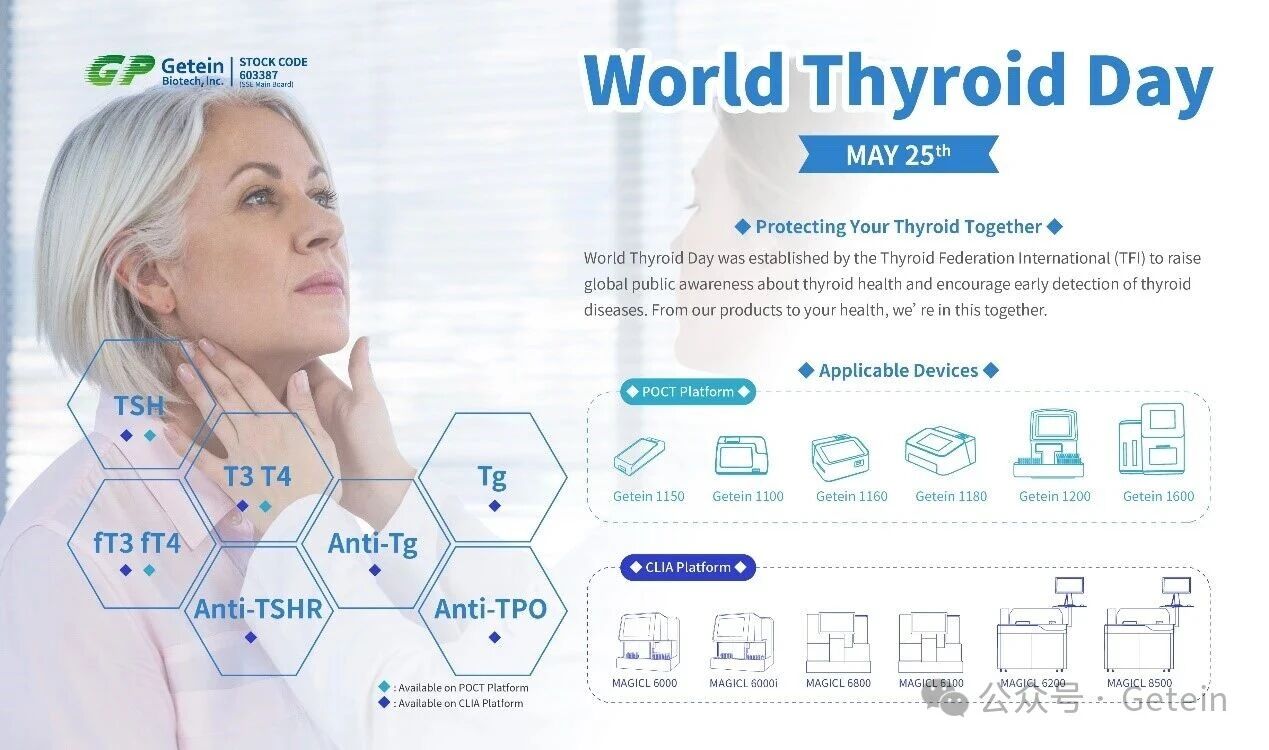
Мы предлагаем полный комплекс интегрированных решений для тестирования функции щитовидной железы на платформе Getein POCT & CLIA.
Здоровье щитовидной железы заслуживает всеобщего внимания. Проходите активные обследования, следите за своим физическим состоянием и берегите здоровье своей хрупкой железы!

откройте wechat и отсканируйте QR-код. оставайтесь с нами.